
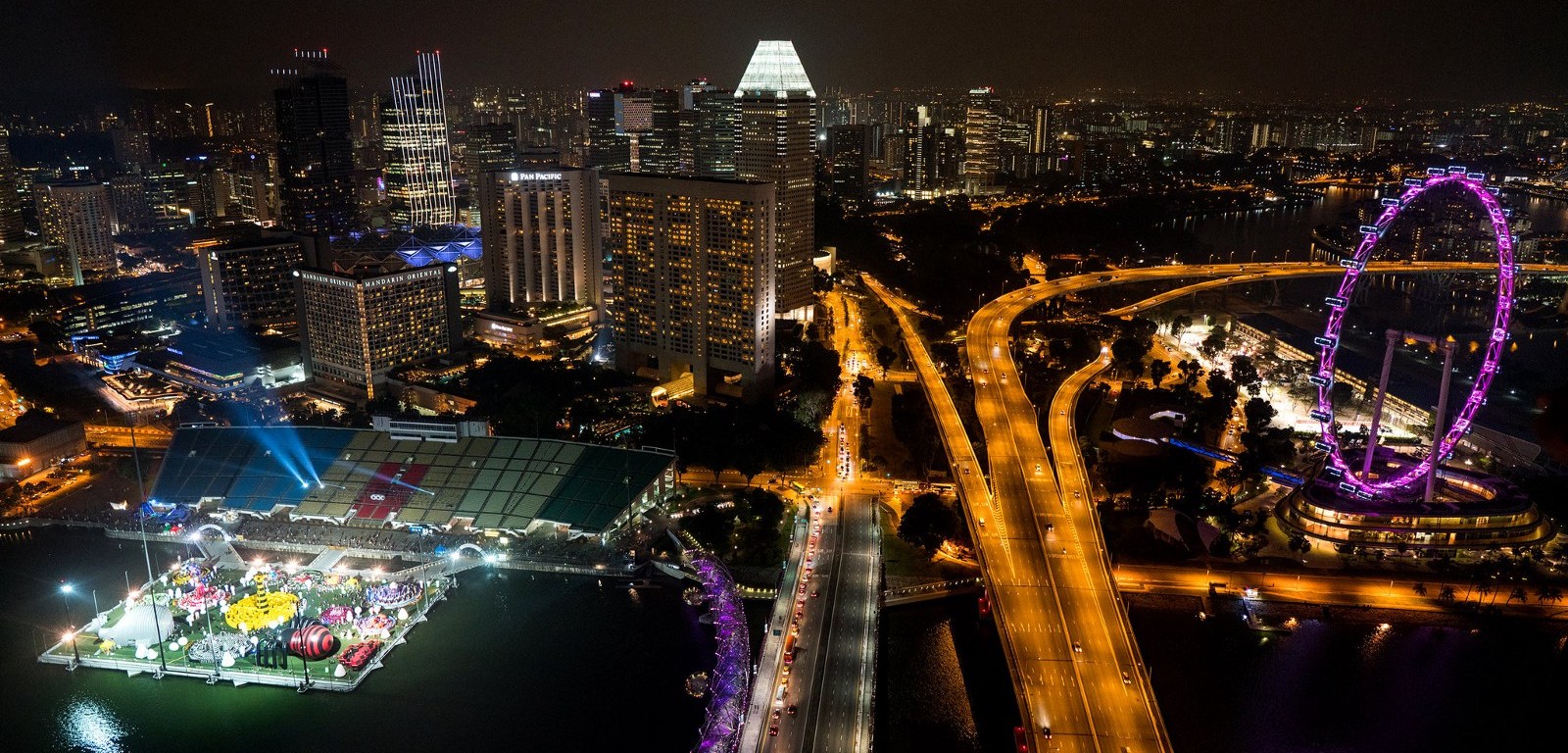
In 1965, Singapore was literally suffering the worst nightmare a country could ever face — the underdeveloped, space-constrained state was expelled from Malaysia and had to stand on its own competing with all other global giants. But within decades, it has spectacularly transformed itself from a society destined to fail to a regional superpower, proudly witnessing its GDP per capita soaring from $500 in 1965 to $50,000 today. This essay delves into three aspects that have been instrumental in generating Singapore’s ultimate triumph: geography, education, and government.
The first and foremost factor contributing to Singapore’s economic prosperity is indisputably its location. At a glance, the country’s distinctive geographical features not only provide its citizens with a mild tropical climate but also guarantee that they remain undisturbed by calamities like earthquakes and tsunamis — surely a favorable condition that Singapore has taken utter advantage of to stabilize the economy and thrive enormously. More importantly, being bestowed with a natural harbor and trading port, where up to 40% of the world’s maritime trade passes through, Singapore has held a significant position for trading activity ever since the 14th century. This strategic location was thereafter reinforced in the 19th century, as the Port of Singapore remained crucial to the expansion of the British Empire, and the 1960s, as most U.S. and European trading ships had to stop at the port to refuel on their trips to Asia, giving it the so-called name “the Suez Canal of Asia.” Combined with open foreign trade and investment policies, Singapore flourished dramatically under Lee Kuan Yew — Singapore’s founding father and visionary leader — as an economic powerhouse and continues to do so today, with its port being one of the busiest and most dynamic in the world.
Second, education plays an extremely vital role in pushing Singapore from a Third World country to what it is today — a member of the First World. From its first days, Singapore’s education system carried a great mission — “to develop Singapore’s only available natural resource, its people” — and so it was established on the basis of solid fundamentals inherited from the country’s British colonial past — those that proved to be tremendously successful afterwards. Apart from offering generous scholarships for pupils and high starting salaries for teachers to attract and retain the best individuals, the nation bases its education system on the ultimate principle of meritocracy, as government scholarship recipients are obliged to do community service for at least two years for every year granted for studying. This, undoubtedly, helps foster economic and societal growth in a balanced manner. Furthermore, the education system of the Singaporeans is one of unremitting progressiveness, having adopted bilingualism to connect the country globally, geared its focus towards developing STEM subjects, and provided endless possibilities for excellence in humanities, arts and sports to encourage creativity and entrepreneurship. Hence, it’s no surprise that today, the nation frequently ranks among the top performers in educational achievement (as evaluated by the OECD’s Program for International Student Assessment) and proudly boasts two premier universities among the top 75 (according to the 2015 Times Higher Education World University Rankings), producing generations of the unbelievably excellent.
Finally, a focus on the government’s transparency and orderliness is undeniably what has set the scene for today’s social stability and rich economy of Singapore. To be particular, unlike that of any other countries in the world, Prime Minister Lee Kuan Yew’s government was inaugurated from the start to become a small, yet efficient, honest and corruption-free. This pragmatic style of ruling, in turn, helps establish a close bond between the government and its citizens. In other words, the fact that the administrators agree to keep their politics honest earn their people’s absolute trust, making them able to push through rigid policies — those that are designated for solely Singapore’s benefits. Although many may refute that Lee’s style of governance is too undemocratic, it sure cannot be denied that it was what brought to the island nation unprecedented wealth and social solidity in merely few decades.
Under Lee’s governance, Singapore underwent a revolutionizing stage in its history, in which it took full advantage on its strategic location, built a meritocratic education system, and established a faithful, pragmatic government. As Singapore continues to prosper, these three elements will unabatingly persist to play their ultimate roles in guaranteeing immense success for the country, both in terms of economy and society.
Source : Medium by Nhi Doan
 Indie Borneo