
By Dr. John Brian Anthony
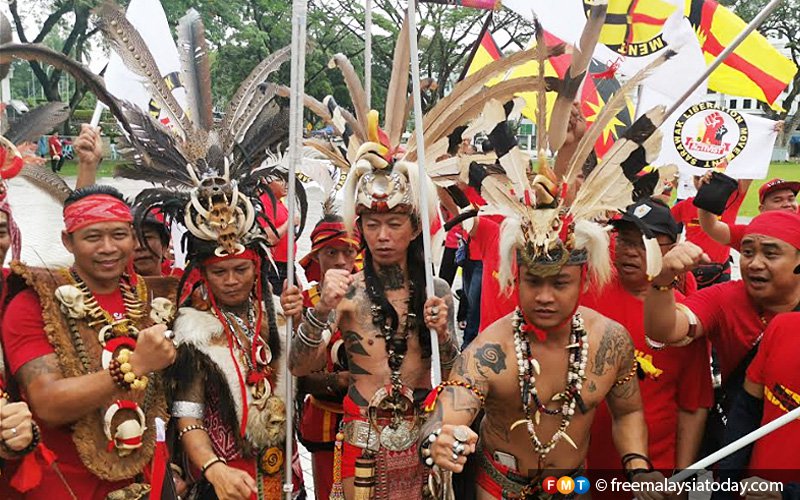
The Dayak community has long been an important part of the social, cultural and political fabric of Malaysia. Since the formation of Malaysia in 1963, the Dayak people have made significant progress in education, politics, agriculture, business and public service. Yet in an increasingly globalized and competitive world, progress alone is not enough. What is needed is a clear direction, collective determination and a sustainable framework for long-term advancement.
The “Dayak Framework” proposed by Dr. John Brian Anthony is more than just a development proposal. It is a call for transformation — a vision that encourages the Dayak community to move forward with confidence, intelligence, unity and self-reliance.
A Vision for Dayak Progress
The framework begins with a simple but powerful idea: the Dayak community must progress at the same pace as the nation itself. Development should not be accidental or temporary. It must be focused, measurable and sustainable.
Globalization has changed the rules of survival. Resources, capital, technology and opportunities are no longer confined within local boundaries. Communities that possess knowledge, influence, financial strength and adaptability will continue to move ahead, while those that fail to prepare risk being left behind.
For the Dayak community, this creates both a challenge and an opportunity.
Rather than focusing entirely on problems and limitations, the Dayak Agenda emphasizes possibilities. It encourages the community to identify practical areas of development and take responsibility for shaping its own future.
Education: The Foundation of Transformation
Education stands at the center of the Dayak Framework. However, the framework goes beyond academic qualifications alone. Diplomas and university degrees are important, but education is also about developing critical thinking, discipline, adaptability and decision-making abilities.
The framework recognizes that strong education begins at home. Parenting, community values and personal discipline are seen as the true foundation of intellectual development.
Dr. Anthony also proposes ambitious targets for the community:
- Establishing a university managed and controlled by Dayak leadership.
- Producing at least ten graduates from every officially recognized longhouse.
These goals are not merely symbolic. They represent a larger aspiration to create a highly educated and intellectually confident generation capable of competing nationally and globally.
Economic Empowerment and Entrepreneurship
Economic independence is another major pillar of the framework. The vision is clear — the Dayak community must become active creators of wealth, not just participants in the economy.
Entrepreneurship is encouraged at every level, from small agricultural businesses and hawkers to modern digital and e-commerce ventures. The framework emphasizes the importance of:
- financial discipline,
- saving and investing,
- networking,
- business knowledge,
- and strong personal values.
One of the most striking proposals is the idea of producing at least one entrepreneur from every family.
The framework also proposes the establishment of a Dayak investment institution capable of supporting Dayak-owned businesses with capital, guidance and networking opportunities.
This approach aims to create long-term economic sustainability rather than dependence on short-term assistance.
Technology as a Tool for Advancement
Technology has already transformed rural Dayak life through transportation, machinery and agricultural tools. However, the framework argues that technology adoption must become more strategic and intentional.
Modern agriculture, infrastructure and education require access to:
- heavy machinery,
- irrigation systems,
- logistics technology,
- information technology,
- and digital communication systems.
Technology is no longer optional in a competitive world. It is a necessary tool for improving productivity, connectivity and economic participation.
One symbolic target proposed in the framework is the ownership of two excavators for every ten longhouses to support agricultural development and land use activities.
The deeper message is clear: technological empowerment must become part of Dayak modernization.
Politics and Leadership
The framework recognizes the historical political unity of the Dayak community and stresses the importance of leadership that genuinely serves the people.
Politics should not only focus on gaining positions or securing projects. Instead, political leadership must prioritize:
- fair distribution of development,
- protection of community rights,
- mental and physical development,
- and long-term self-sufficiency.
Dr. Anthony argues that effective political struggle depends on the ability to influence laws and national policies that enable, rather than restrict, Dayak advancement.
This vision challenges leaders to move beyond dependency politics and toward sustainable community empowerment.
Intelligence and Community Mindset
One of the most unique sections of the framework is its discussion on intelligence and cognitive development.
According to the framework, intelligence is created through interaction, learning and the transmission of meaning between adults and children. The ability to analyze, adapt, think critically and understand changing environments is essential for survival in the modern world.
The framework argues that Dayak society must strengthen its thinking culture by:
- encouraging logical reasoning,
- improving interpretation of experiences,
- promoting abstract thinking,
- and developing strong value systems.
Without intellectual independence, communities become dependent on others for direction and meaning.
This emphasis on mental development makes the framework not only an economic or political blueprint, but also a philosophical and psychological roadmap for empowerment.
Preserving Dayak Culture
Modernization does not mean abandoning identity. In fact, the framework warns that culture can disappear when traditions, meanings and knowledge are no longer transmitted between generations.
Dayak culture survives through:
- storytelling,
- rituals,
- festivals,
- community practices,
- and shared meanings.
The framework stresses the importance of protecting these traditions while adapting to modern realities. Cultural survival requires organization, education and active participation from the community itself.
Preserving culture is not about resisting progress — it is about ensuring that progress does not erase identity.
Sustainable Development for Future Generations
The Dayak community has traditionally lived closely with nature and practiced consumption based on actual needs. However, rapid industrialization and profit-driven development threaten environmental balance and traditional livelihoods.
The framework strongly supports sustainable development — development that meets present needs without destroying the future.
This means balancing:
- economic growth,
- environmental responsibility,
- social participation,
- and long-term community wellbeing.
The framework calls on the Dayak community to become leaders in sustainable and ethical development practices.
The Challenge Ahead
Perhaps the most powerful message in the framework is its call for self-responsibility.
The Dayak community cannot wait indefinitely for others to define its future. Progress requires courage, discipline, unity and effort from within the community itself.
Dr. Anthony emphasizes a new mindset:
“It is my needs, it must be achieved through my own effort.”
This philosophy encourages ownership, initiative and determination.
Conclusion: The Journey Forward
The Dayak Framework is more than a development strategy. It is a vision of collective awakening — a roadmap toward intellectual strength, economic independence, political maturity, cultural survival and sustainable progress.
Its message remains deeply relevant today. In a rapidly changing world, communities that invest in knowledge, adaptability and unity will continue to thrive.
The future of the Dayak community will not be determined by chance. It will be shaped by leadership, education, discipline and the willingness of the people themselves to rise together.
As Dr. John Brian Anthony describes it:
“This is the first step to a journey of a thousand miles.”
Source : Dr. John Brian Anthony (DMgmt)
 Indie Borneo