
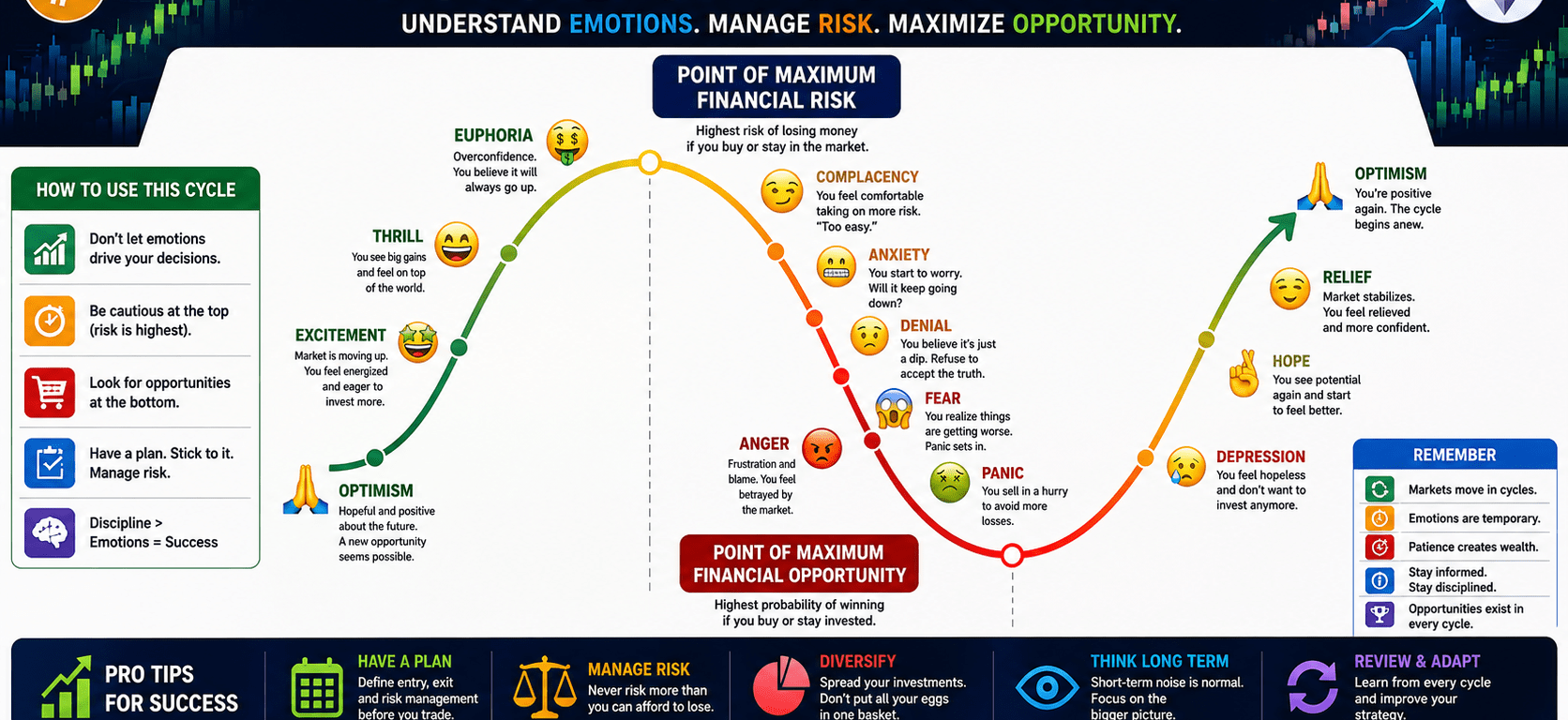
Why Emotions Control Most Investment Decisions
Investing is often viewed as a numbers game — charts, financial reports, market analysis and economic trends. Many people believe successful investing depends purely on intelligence or technical knowledge.
But in reality, one of the biggest factors that determines investment success is something far more human: emotion.
When investments are performing well, confidence naturally increases. Investors begin to feel they have mastered the game. Profits create excitement, optimism and sometimes even overconfidence. During these moments, many believe the good times will continue indefinitely.
However, when markets suddenly decline, emotions quickly shift.
Fear replaces confidence. Panic begins to grow. Investors who once felt certain about their strategies suddenly doubt themselves and many rush to exit the market, declaring that investing is “not their cup of tea.”
This emotional cycle happens repeatedly across stock markets, cryptocurrency markets and nearly every type of investment environment.
The Two Emotions That Drive Markets
At the center of most investment decisions are two powerful emotions:
- fear,
- and greed.
These emotions heavily influence human behavior and often override logical thinking.
Fear
Fear appears when markets fall.
As prices decline, investors worry about:
- losing money,
- economic uncertainty,
- market crashes,
- or making wrong decisions.
Fear causes many people to sell their investments during downturns — often at the worst possible time.
Ironically, market corrections and crashes frequently create some of the best opportunities for long-term investors. But fear prevents many people from taking advantage of them.
Greed
Greed appears during bull markets.
When prices rise rapidly and everyone seems to be making profits, investors feel pressured to join the excitement. Social media, news headlines and success stories amplify this feeling.
As greed grows:
- investors take larger risks,
- ignore warning signs,
- and believe prices will continue climbing forever.
This is why many inexperienced investors buy assets near market peaks.
Why Most Investors Buy High and Sell Low
Human psychology naturally pushes people toward emotional decisions.
When markets rise:
- confidence grows,
- fear disappears,
- and investors become more aggressive.
When markets fall:
- panic increases,
- uncertainty dominates,
- and investors become defensive.
As a result, many people end up:
- buying after prices have already risen significantly,
- and selling after prices have already fallen heavily.
This behavior explains why emotional investing often leads to poor long-term results.
Successful Investors Think Differently
Experienced investors understand that controlling emotions is just as important as understanding markets.
Instead of reacting emotionally, they focus on:
- discipline,
- patience,
- research,
- and long-term strategy.
They recognize that markets move in cycles and that volatility is a normal part of investing.
Most importantly, successful investors often do the opposite of what emotions encourage.
When fear dominates the market, they search for opportunities.
When greed becomes excessive, they become more cautious and protective of profits.
This mindset is difficult because it goes against natural human instinct.
Emotional Discipline Is the Real Advantage
Many people believe successful investing requires predicting the market perfectly. In reality, long-term success often depends more on emotional discipline than market prediction.
Investors who can remain calm during uncertainty are more likely to:
- avoid panic selling,
- resist hype-driven buying,
- make rational decisions,
- and stay committed to long-term goals.
The market rewards patience far more often than emotional reactions.
Final Thoughts
Financial markets will always experience cycles of optimism and fear. Prices will rise, fall and recover over time.
The real challenge for investors is not simply understanding the market — it is understanding themselves.
Fear and greed will always influence human behavior. But investors who learn to control their emotions instead of being controlled by them are far more likely to build long-term wealth and financial stability.
As one of the most famous investing principles reminds us:
“Be fearful when others are greedy, and greedy when others are fearful.”
For further readings do check on below lists:
Market cycles and emotions by Henil Shah
The Cycle Of Market Emotions: Where Are We Now? by Rob Isbitts
Trading Psychology by Trading View
 Indie Borneo