
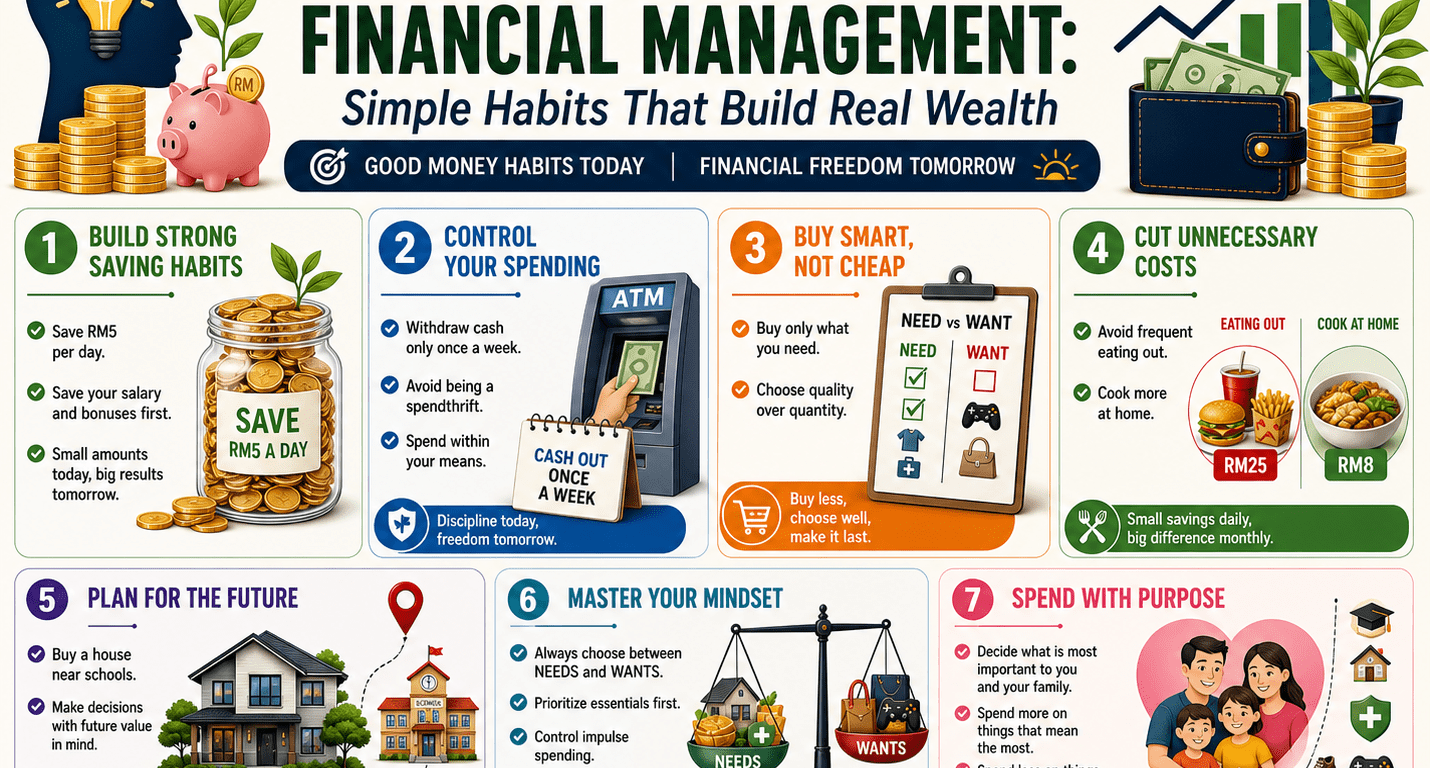
In today’s fast-paced world, managing money isn’t just about how much you earn—it’s about how well you control, save, and spend it. Many people struggle financially not because they lack income, but because they lack discipline and clarity in their financial habits.
The good news? Financial stability doesn’t require complicated strategies. It starts with simple, consistent actions practiced daily.
Start Small: Build a Saving Habit That Lasts
You don’t need a large income to begin saving. Even something as small as $5 a day can make a difference. Over time, this habit builds discipline and creates a financial cushion.
Saving should not be what’s left after spending. Instead, treat savings as a priority, just like paying a bill. Whether it’s your monthly salary or bonus, set aside a portion first before anything else.
Control Your Spending Before It Controls You
One of the easiest ways to manage your money is by limiting access to it. Withdrawing cash from the ATM once a week helps you become more aware of your spending habits.
Avoid the trap of being a spendthrift. Every dollar you spend should serve a purpose. Living within your means isn’t a restriction—it’s a form of financial freedom that keeps you in control.
Buy What Matters, Not What Impresses
We live in a world driven by trends and instant gratification. But smart financial management requires discipline.
Before making any purchase, ask yourself:
“Do I really need this?”
Focus on buying only what is necessary. More importantly, choose quality over quantity. A durable product may cost more upfront, but it saves you money in the long run by lasting longer and performing better.
Cut Down Silent Expenses
One of the biggest hidden drains on your finances is frequent eating out. While it may seem convenient, the cost adds up quickly over time.
Cooking at home is not only healthier but also significantly cheaper. By reducing unnecessary lifestyle expenses, you free up more money for savings and investments.
Think Long-Term When Making Big Decisions
Major financial decisions, such as buying a house, should always be approached with long-term thinking. Choosing a home near schools, for example, can increase property value and provide convenience for your family.
Good financial management isn’t just about today—it’s about setting yourself up for the future.
Master the Difference Between Needs and Wants
This is one of the most important principles in financial success.
Needs are essentials—food, shelter, healthcare, and education.
Wants are everything else.
Training yourself to distinguish between the two helps prevent unnecessary spending and keeps your finances aligned with your priorities.
Spend According to What Truly Matters
Money is a tool, and how you use it should reflect your values.
Spend more on things that genuinely improve your life and bring happiness to your family. At the same time, reduce spending on things that add little value.
When your spending aligns with your values, you gain more satisfaction without needing to spend more.
Define Your Financial Priorities
Everyone’s financial journey is different. Some prioritize security, others focus on growth or family well-being.
What matters is clarity.
When you know what is most important to you, it becomes easier to:
- Make better financial decisions
- Avoid unnecessary expenses
- Stay committed to your goals
Final Thoughts
Financial success doesn’t come from luck or sudden wealth. It comes from consistent habits, disciplined spending, and clear priorities.
You don’t need to be perfect—you just need to start.
“It’s not about how much you earn, but how wisely you manage what you have.”
 Indie Borneo