
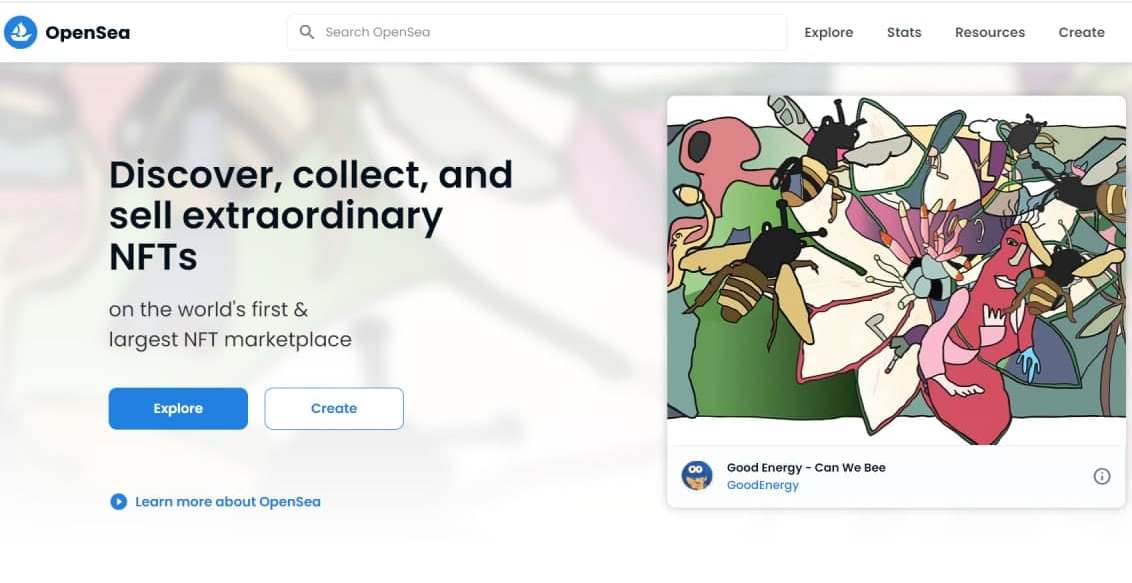
Among the many NFT platforms that emerged, OpenSea became one of the most influential and widely used marketplaces.
OpenSea allows users to:
- buy NFTs,
- sell NFTs,
- mint digital assets,
- and explore collections from creators worldwide.
The platform supports multiple blockchain ecosystems and hosts millions of digital assets across different categories.
For many users, OpenSea became the gateway into the NFT world.
Why OpenSea Grew Rapidly
Several factors contributed to OpenSea’s popularity.
Accessibility
OpenSea made NFT trading relatively easy for beginners by simplifying the process of listing and purchasing digital assets.
Large Community
The platform quickly built a massive user base, attracting creators, collectors and investors globally.
Variety of NFTs
Users can find almost every category of NFT on OpenSea:
- digital art,
- gaming assets,
- profile picture collections,
- sports collectibles,
- music NFTs,
- and virtual worlds.
Integration With Crypto Wallets
OpenSea connects directly with popular cryptocurrency wallets, allowing users to manage transactions securely.
The Hype and Speculation
As NFT popularity exploded, so did speculation.
Some digital artworks sold for astonishing prices, attracting mainstream media attention and celebrity involvement. Investors rushed into NFT projects hoping to profit from rising demand.
However, the hype also created challenges:
- market volatility,
- scams,
- fake collections,
- copyright disputes,
- and unsustainable speculation.
Many NFT projects experienced dramatic price increases followed by major declines once market enthusiasm cooled.
NFTs Beyond Art
While NFTs are often associated with digital art, the technology has potential applications far beyond collectibles.
Industries exploring NFT technology include:
- gaming,
- entertainment,
- sports,
- fashion,
- ticketing,
- education,
- and digital identity systems.
NFTs may eventually become tools for:
- ownership verification,
- event access,
- intellectual property management,
- and virtual economies within the metaverse.
The Future of NFTs
Although NFT markets have experienced ups and downs, the underlying technology continues to evolve.
Many experts believe NFTs could become part of a broader digital ecosystem where ownership, identity and virtual experiences become increasingly important online.
The future may not look exactly like the initial hype cycle, but NFTs have already changed how people think about digital assets and online creativity.
Final Thoughts
NFTs introduced a new era of digital ownership and online creativity. Platforms like OpenSea helped accelerate this movement by creating a marketplace where creators and collectors from around the world could connect directly.
While the NFT space remains highly speculative and constantly evolving, its impact on technology, digital culture and the future of the internet is undeniable.
The NFT revolution may still be in its early stages — and the digital economy continues to evolve with it.
 Indie Borneo