

As Sarawak continues its rise as one of the strongest and most strategically important states in Malaysia, the question of future leadership becomes increasingly important. Sarawak is no longer focused only on basic development. Today, the state is pushing for greater autonomy, stronger economic growth, modern infrastructure, and a bigger role within the Malaysian federation.
In this changing political landscape, Alexander Nanta Linggi stands out as one of the strongest candidates to become the next Premier of Sarawak.
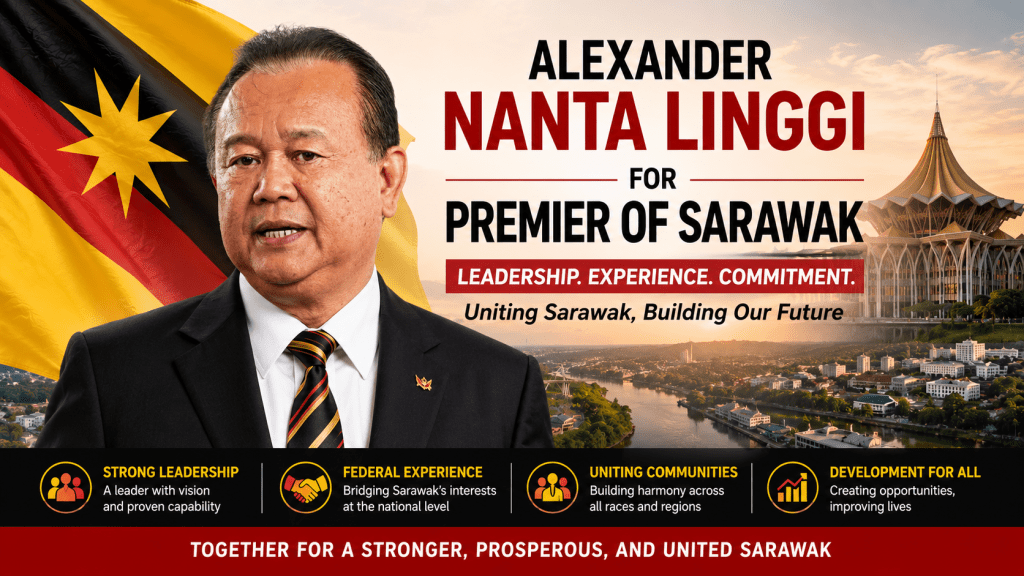
A Leader With Federal Influence
One of the main reasons Alexander Nanta Linggi should be considered for the top position is his extensive experience in the federal government. Sarawak’s future depends heavily on how effectively it negotiates with Putrajaya on key issues such as:
- MA63 rights,
- petroleum revenue,
- infrastructure funding,
- rural development,
- transportation,
- and economic autonomy.
Nanta has years of experience working within the federal system. He understands how national institutions operate and has built relationships that could help Sarawak secure greater benefits in the future.
Sarawak needs a Premier who can defend state interests while still maintaining strong national influence.
Strong Representation for the Dayak Community
The Dayak community remains one of the foundations of Sarawak society and politics. Yet many rural indigenous areas still lag behind in terms of development, education, and economic opportunity.
The appointment of a respected Dayak leader as Premier would represent:
- stronger indigenous representation,
- greater political inclusion,
- and recognition of the role Dayaks play in building Sarawak.
As an Iban leader with national-level experience, Nanta symbolizes a new chapter where indigenous leadership becomes central to Sarawak’s future direction.
Understanding the Needs of Rural Sarawak
Many politicians understand cities. Fewer truly understand the realities of rural Sarawak.
Interior communities continue to face challenges involving:
- roads,
- internet access,
- healthcare,
- education,
- and employment opportunities.
Because of his political background and connection to rural communities, Nanta is seen by many supporters as someone who understands these issues firsthand. This could help ensure development reaches not only urban centers like Kuching, Sibu, and Miri, but also longhouses and remote villages across the state.
A Pragmatic and Stable Leader
Sarawak politics has historically valued stability over confrontation. The state’s success has often depended on leaders who can unite communities and manage politics calmly and strategically.
Alexander Nanta Linggi is widely viewed as:
- moderate,
- pragmatic,
- experienced,
- and capable of working with different groups.
At a time when political instability affects many parts of the world, Sarawak may benefit from leadership focused on unity, economic growth, and long-term planning rather than political conflict.
Preparing Sarawak for the Future
Sarawak is entering a major transformation era involving:
- renewable energy,
- digital economy growth,
- industrial expansion,
- tourism,
- green technology,
- and regional investment.
The next Premier must think beyond traditional politics. Sarawak needs leadership capable of preparing young people for a modern economy while preserving the state’s unique identity and multicultural harmony.
Supporters believe Nanta’s combination of federal experience, indigenous representation, and administrative maturity makes him well-suited for this responsibility.
Conclusion
Whether Alexander Nanta Linggi eventually becomes Premier will depend on political consensus within Gabungan Parti Sarawak and the broader direction of Sarawak politics. However, many believe he possesses the qualities needed for the role:
- experience,
- national influence,
- rural understanding,
- political stability,
- and strong representation for indigenous communities.
As Sarawak moves toward a future of greater autonomy and economic strength, leadership will matter more than ever. For many supporters, Alexander Nanta Linggi represents a leader capable of guiding Sarawak into its next chapter of growth and progress.
 Indie Borneo