
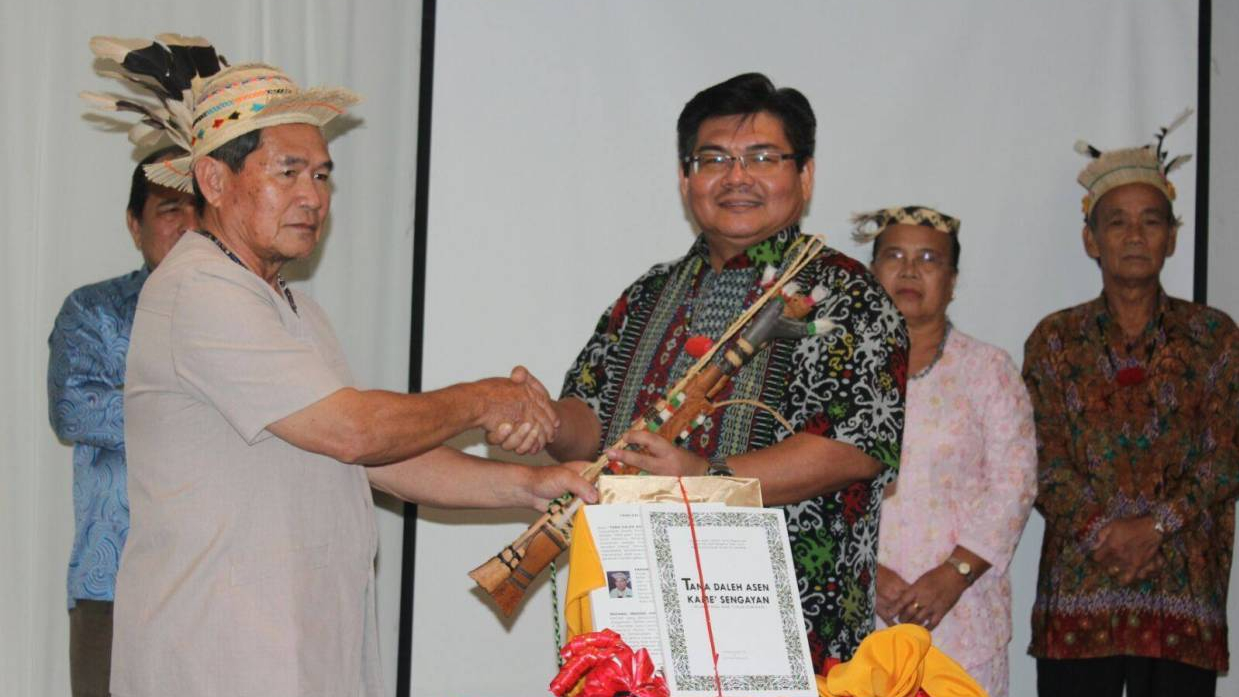
MIRI: A local human rights group says it has identified several reasons why Sarawak has a high population of poor families, even though the state is the richest in natural resources in the country.
Society for the Rights of Indigenous Peoples of Sarawak (Scrips) said there is a lot of truth behind the latest United Nations report that said Sarawak has a high rate of poverty.
Scrips secretary-general Michael Jok told The Star on Thursday (Aug 29) that the organisation had carried out ground analysis over the years in Sarawak concerning poverty and human rights issues.
“State government leaders and political leaders often say that Sarawak is the richest state in the country.
“But the actual fact on the ground is that the common people in Sarawak are among the poorest in the country.
“Scrips has analysed the situation on the ground as accurately as possible, and we can categorise the reasons into three main categories.
“Firstly, there are bad policies that deny the interest of the majority in Sarawak, in favour of a powerful few and their cronies.
“Secondly, there are politics involved where certain politicians in power use poverty as a divide-and-rule tactic.
“Thirdly, there are many social woes such as a lack of education and poor discipline among the communities that engulf them in the cycle of poverty,” said Jok.
He was commenting on the latest United Nations report on extreme poverty and human-rights issues that said the percentage of low-income earners in Sarawak was higher than the national average.
The UN report was compiled by Professor Philip Alston, who is the UN Special Rapporteur on Extreme Poverty and Human Rights Issues.
Alston visited Malaysia in early August to check on the latest poverty and human rights situation, and he visited Sarawak as part of his nationwide tour.
His report to the UN was forwarded to Putrajaya.
A copy of the report made available to The Star showed that Kelantan, Sabah and Sarawak have the highest poverty rates.
“At the national level, 8.8% of households in Malaysia have a monthly income of less than RM2,000.
“The situation is more dire in certain states,” the report read, also pointing out that in Sarawak, 15.5% of households have a total family monthly income of less than RM2,000.
Alston said though the Federal Government is serious in wanting to eliminate poverty, there are still many issues on the ground that needed to be urgently addressed at both the federal and states levels.
Apart from the high rate of low-income households, the other specific areas of human rights issues concerning Sarawak are in education, health-care, statelessness, land-rights woes and other social development issues.
Alston said that among others, it was found that many families in rural Sarawak have difficulties in terms of having access to government health-care facilities.
Rural children also face hardship in reaching government-built schools, especially secondary schools, he said.
He also noted that those people still without identity cards faced enormous woes in their daily life.
Jok also said Sarawak state leaders must take the latest UN report seriously.
“There must be good governance at both federal and state government levels in terms of policies and laws.
“They must engage the NGOs and community bodies also to change mindset of the rakyat through education and training,” he said.
Source : The Star by Stephen Then
 Indie Borneo