
Can human beings live freely without depending on the government?
For centuries, governments have claimed the authority to govern people, collect taxes, regulate economic activities, control borders, and establish the laws that shape society. Governments are often justified as necessary institutions for maintaining order, protecting citizens, and providing public services.
But an important question remains: How much of our lives should we surrender to the state, and how much freedom can we reclaim for ourselves?
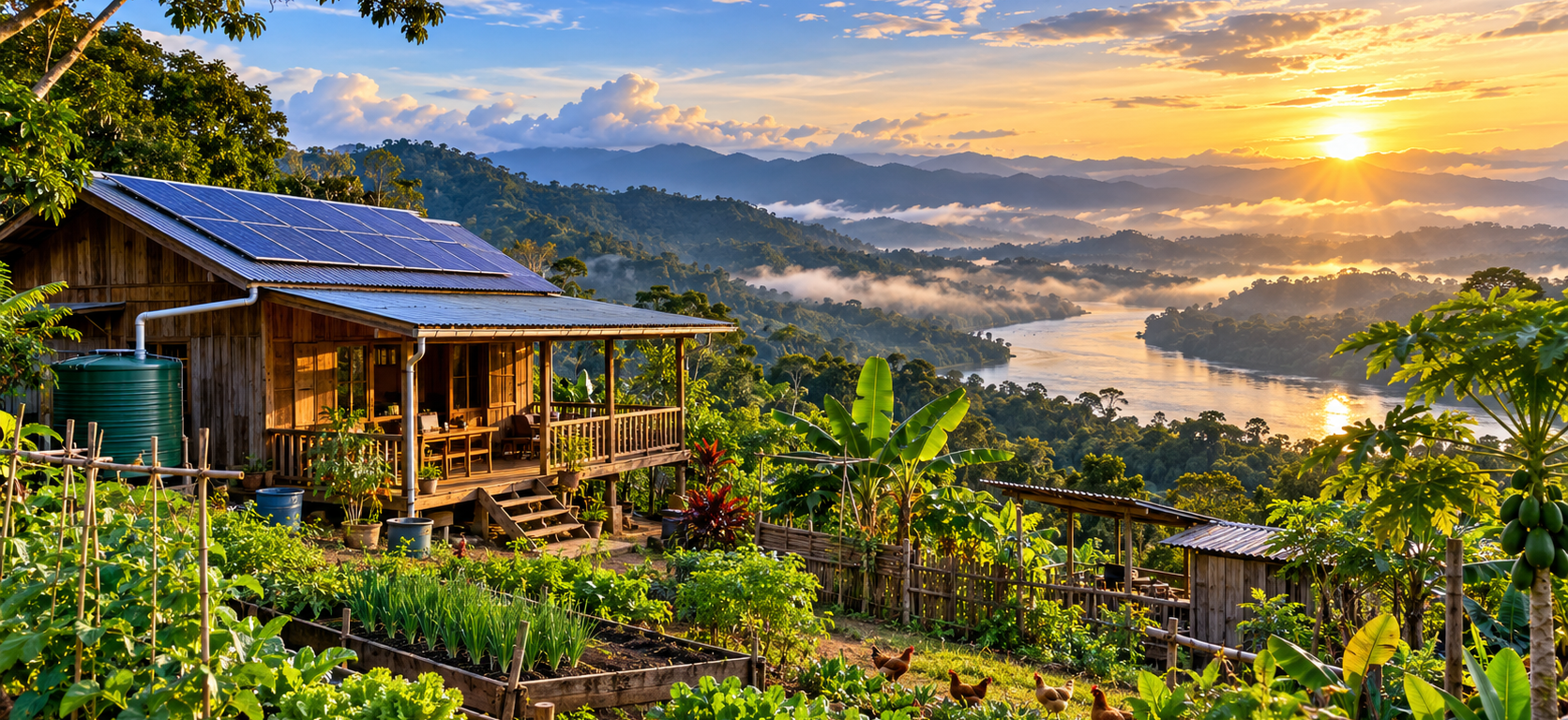
Imagine a different way of living — one where individuals are economically independent, communities support one another, food is grown locally, energy is produced independently, and people have greater control over their own decisions.
This is the idea of living a life with minimal dependence on government.
1. The Illusion of Complete Dependence
Modern society encourages people to follow a familiar path. We attend school, obtain employment, earn money, pay taxes, purchase necessities, borrow money, and spend decades working to sustain our lifestyles.
Much of our survival depends on systems we do not control.
Our food comes from commercial supply chains. Our electricity comes from utility providers. Our income depends on employers or customers. Our savings depend on financial institutions. Our daily lives are influenced by laws and policies made by people we may never meet.
This does not automatically mean that government or institutions are harmful. Public infrastructure, healthcare, education, and legal protections can provide significant benefits.
However, excessive dependence creates vulnerability.
When a person has no savings, no alternative source of income, no practical skills, and no ability to produce basic necessities, even a small disruption can threaten their livelihood.
Freedom begins when we reduce the number of things that can control our survival.
2. Financial Independence Is the First Step
It is difficult to be independent when every month begins with financial anxiety.
A person who depends entirely on one salary may have little freedom to reject an unfair working environment, pursue a personal ambition, or leave an unhealthy situation.
Financial independence does not necessarily mean becoming a millionaire. It means building enough resources and flexibility to make decisions without being driven entirely by financial desperation.
This can begin with simple actions:
- Eliminate unnecessary debt and reduce recurring expenses.
- Build an emergency fund to protect against unemployment or unexpected costs.
- Develop skills that can generate independent income.
- Establish a small business, freelance service, or other legitimate source of earnings.
- Invest carefully for the long term rather than relying on speculation.
- Avoid lifestyles that require continuously increasing income just to maintain them.
The objective is to own more of your time.
A person with modest expenses, useful skills, and sufficient savings may enjoy greater practical freedom than someone with a high salary but overwhelming financial obligations.
3. Food Independence: Grow What You Can
Food is one of the most fundamental requirements of human survival.
Yet many people depend almost entirely on commercial food systems. They purchase nearly everything they consume and may have little knowledge of how their food is produced.
A more independent lifestyle begins by growing some of your own food.
A small garden can produce vegetables, herbs, and fruits. A larger plot may support staple crops, fruit trees, and other agricultural activities. Where practical and lawful, households can also raise poultry or participate in community farming.
In Borneo, the tropical climate offers opportunities for growing a variety of crops, although soil conditions, flooding, pests, and local environmental conditions must be considered.
Food independence does not require abandoning supermarkets altogether. Even producing a portion of household food can reduce expenses, build practical knowledge, and provide a measure of resilience.
The more people understand how to produce, preserve, and share food, the less vulnerable they may become to disruptions in commercial supply chains.
4. Energy and Water Independence
Electricity and clean water are essential to modern living.
However, households can reduce their reliance on centralised utilities through appropriate technologies.
Solar panels and battery systems can provide electricity where installation is feasible. Rainwater collection, when properly designed and treated, can supplement household water supplies. Efficient appliances, natural ventilation, and good building design can reduce energy consumption.
These systems require initial investment, maintenance, and careful planning. Solar equipment can fail, batteries eventually need replacement, and untreated rainwater may not be safe to drink.
Nevertheless, greater self-sufficiency is achievable.
The objective is not necessarily to disconnect from every utility. It is to develop alternatives so that an interruption in one system does not immediately become a crisis.
5. Communities Can Be Stronger Than Isolation
Living independently does not mean living alone.
In fact, complete individual self-sufficiency is extremely difficult. No single person can easily produce everything needed for modern life, from food and medicine to tools, construction materials, and technology.
A more realistic model is a community of independent households that cooperate voluntarily.
One family may grow vegetables. Another may repair machinery. Someone else may provide healthcare services, education, construction, or digital skills.
People can exchange services, share equipment, establish community gardens, and support one another during emergencies.
Such cooperation can reduce costs while strengthening relationships.
The principle is simple: independent people can build interdependent communities without requiring every aspect of their lives to be controlled by a central authority.
This idea is compatible with several political and social traditions, including voluntary cooperation, mutual aid, local self-governance, and certain forms of anarchist thought.
6. Can We Live Completely Without Government?
This is where the discussion becomes more complicated.
A person can reduce dependence on government services, but living entirely outside governmental authority is a different matter.
Even people living in remote areas may remain subject to national laws, land regulations, environmental rules, taxation requirements, and other legal obligations.
Roads, hospitals, emergency services, courts, and public infrastructure also play important roles in many communities.
Furthermore, a society without a central government would still need ways to resolve disputes, protect vulnerable people, manage shared resources, and respond to violence or emergencies.
Removing a government does not automatically remove power. Authority may simply shift to private organisations, wealthy individuals, local leaders, or other groups.
Therefore, the more important question may not be whether government should exist at all, but how authority can be limited, held accountable, and prevented from dominating people’s lives.
7. The Case for Local Autonomy
Communities should have meaningful opportunities to make decisions about their own affairs.
Local autonomy can allow people to shape development priorities, protect their cultural heritage, manage resources responsibly, and establish institutions suited to their circumstances.
In places such as Sarawak and the wider island of Borneo, discussions about local autonomy may also involve land rights, community identity, economic development, environmental protection, and the relationship between local communities and centralised institutions.
Greater autonomy does not necessarily require the complete disappearance of government. It can involve stronger local decision-making, transparent public administration, accountable leadership, and meaningful participation in political processes.
A community that understands its rights, possesses productive resources, and has strong local institutions is better positioned to determine its future.
8. Reclaiming Freedom Through Simplicity
Modern society often equates success with accumulating wealth, purchasing property, owning expensive possessions, and continuously upgrading one’s lifestyle.
But every additional obligation can reduce freedom if it requires more money, more working hours, and greater dependence on external systems.
A simpler lifestyle offers another possibility.
Spend less than you earn. Learn to repair things. Produce some of your own necessities. Avoid unnecessary borrowing. Build useful skills. Maintain relationships with people you trust. Invest in assets that contribute to long-term security.
Most importantly, learn to distinguish between genuine needs and manufactured desires.
The objective is not poverty or rejection of technological progress. It is to create a life in which possessions and institutions serve human needs rather than dictate them.
9. A Practical Roadmap to Greater Independence
A person who wants to become less dependent on government and large institutions can begin gradually.
Year One: Strengthen your personal foundation.
Reduce unnecessary expenses, establish emergency savings, develop practical skills, and identify opportunities for additional income.
Year Two: Build productive capacity.
Start a garden, develop a small business or freelance service, learn basic maintenance, and explore appropriate renewable-energy options.
Year Three: Establish stronger community networks.
Build relationships with local producers, tradespeople, neighbours, and other people who value mutual support. Explore cooperative purchasing, community projects, and skills exchanges.
Beyond Year Three: Increase your autonomy.
Continue reducing unnecessary dependencies, improve your financial resilience, acquire productive assets where feasible, and participate in decisions affecting your community.
Progress will depend on personal circumstances, available resources, local laws, and the cost of establishing independent systems.
The point is to move towards independence without creating new forms of insecurity.
Conclusion: Freedom Begins With Self-Reliance
Living a life without government may be an ideal for some people, but complete separation from governmental authority is difficult in the modern world.
A more practical ambition is to live with greater independence, personal responsibility, and control over one’s future.
We can build financial resilience. We can grow food, learn useful skills, generate some of our own energy, support local communities, and become less dependent on any single employer, institution, or source of income.
We can also demand transparent government, accountable leadership, fair laws, and meaningful local autonomy.
The ultimate objective is not simply to escape authority. It is to ensure that no single institution possesses excessive control over our ability to live a dignified and meaningful life.
A free person is not necessarily someone who lives without a government. A free person is someone who possesses the knowledge, resources, and courage to make meaningful choices about their own life.
Perhaps the real revolution begins when ordinary people stop measuring their freedom by what they are allowed to consume and start measuring it by what they are capable of creating, sustaining, and deciding for themselves.
Independence begins with the individual. Resilience grows through the community. Freedom becomes meaningful when people have the power to shape their own future.

