
In today’s workplace, dress codes have become more relaxed than ever before. Business casual has replaced formal business wear in many organisations, and remote work has further blurred the lines between professional and casual attire. Yet one important question remains:
Does the way you dress still matter?
The answer is yes.
Whether attending a job interview, meeting clients, delivering a presentation, or representing your organisation, your appearance creates a powerful first impression before you even speak.
Your Appearance Communicates Before You Do
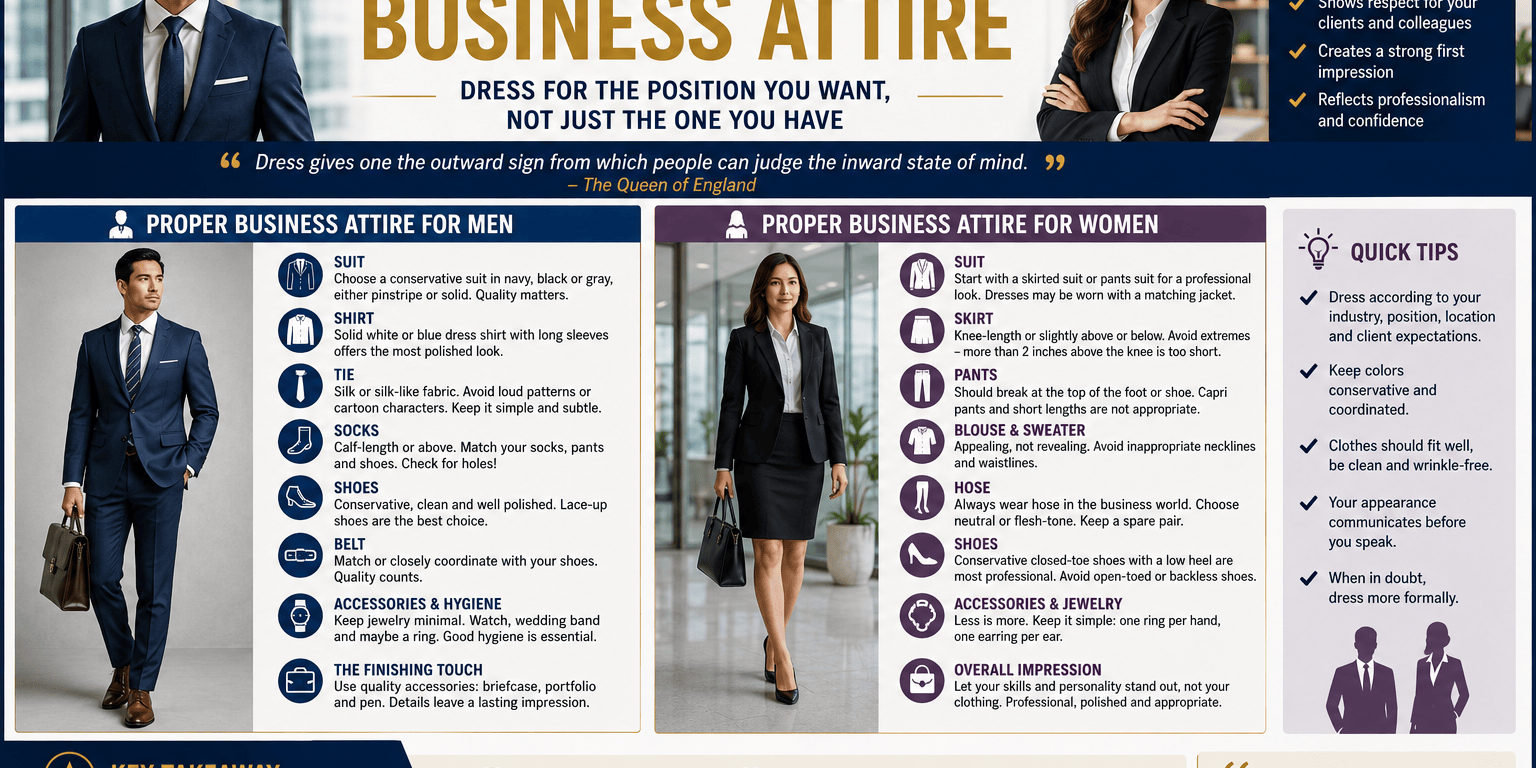
There is a well-known saying often attributed to Queen Elizabeth II:
“Dress gives one the outward sign from which people can judge the inward state of mind.”
Although people should not judge others solely by appearance, the reality is that first impressions are formed within seconds. Your clothing sends subtle messages about your professionalism, confidence, attention to detail, and respect for those around you.
Imagine walking into a busy restaurant during lunchtime. Without speaking to anyone, you will naturally make assumptions about people based on how they are dressed. The same thing happens in business.
Professional attire helps build trust and credibility before the conversation even begins.
Dress for Your Audience
There is no universal dress code that applies to every profession. Appropriate business attire depends on several factors:
- Your industry
- Your job role
- Your company’s culture
- Your geographical location
- Most importantly, your clients’ expectations
A lawyer meeting corporate executives will dress differently from a software developer working in a technology startup. The key is dressing appropriately for your professional environment while maintaining a polished appearance.
Business Attire for Men
Men’s business fashion changes slowly over time. Rather than chasing trends, professionals should focus on timeless, well-fitted clothing.
Wear a Conservative Suit
Choose a suit in classic colours such as:
- Navy blue
- Charcoal grey
- Black
Quality fabric and proper tailoring create a far stronger impression than flashy designs.
Select a Classic Dress Shirt
A white or light blue long-sleeved dress shirt remains the safest and most professional option. Simple colours keep the attention on you rather than your clothing.
Keep Your Tie Professional
If wearing a tie, choose silk or quality fabric with subtle patterns. Avoid novelty prints or loud designs that may distract from your professional image.
Shoes Matter
People often notice shoes before they notice anything else.
Your shoes should be:
- Clean
- Well-polished
- Conservative
- Closed-toe leather shoes
Pair them with matching socks and a belt that complements your shoes.
Wear Minimal Accessories
Less is more.
A professional appearance typically requires only:
- A quality watch
- A wedding ring (if applicable)
- A professional briefcase or portfolio
- A quality pen
Avoid excessive jewellery or overpowering fragrances.
Maintain Personal Grooming
Good grooming is just as important as good clothing.
Always ensure:
- Neatly styled hair
- Clean-shaven or well-groomed facial hair
- Fresh breath
- Clean fingernails
- Good personal hygiene
Professionalism extends beyond clothing.
Business Attire for Women
Modern business attire allows women far greater flexibility while maintaining professionalism.
The goal is not to follow every fashion trend but to project confidence, competence, and credibility.
Choose Professional Suits
Well-tailored skirt suits or pantsuits remain excellent choices for professional settings. Dresses can also be appropriate when paired with a matching blazer or jacket.
Skirts and Pants
If wearing a skirt, it should generally be around knee length.
If wearing trousers, ensure they fit properly and fall neatly over the shoes. Extremely casual styles such as leggings, ripped jeans, or Capri pants are generally unsuitable for formal business environments.
Professional Tops
Blouses and sweaters should be elegant rather than revealing.
Choose styles that:
- Fit well
- Are not overly tight
- Have modest necklines
- Complement the rest of your outfit
Shoes
Closed-toe shoes with a moderate heel are usually the safest professional choice.
Extremely high heels, flip-flops, or beach sandals are generally inappropriate for formal business settings.
Accessories
Accessories should enhance your appearance without becoming the centre of attention.
Simple jewellery, a quality handbag, and a professional watch are often all that is needed.
Dress for Success
Professional clothing is an investment rather than an expense.
Appropriate attire can:
- Create positive first impressions
- Build confidence
- Increase credibility
- Demonstrate respect for clients and colleagues
- Reflect attention to detail
- Strengthen your personal brand
While skills, knowledge, and experience remain the most important factors for long-term success, appearance helps open doors by creating trust from the very beginning.
Final Thoughts
Professional business attire is not about wearing the most expensive clothes or following the latest fashion trends. It is about dressing appropriately for your profession, your audience, and the image you wish to project.
When your appearance reflects confidence, competence, and professionalism, people are more likely to trust your abilities before you even begin speaking.
Remember, your clothing does not define who you are—but it often shapes the first impression others have of you. Dress professionally, act confidently, and let your knowledge and character reinforce the image you present.
Source : http://www.sideroad.com/Business_Attire/proper-business-attire.html by Lydia Ramsey
 Indie Borneo