

Money is more than paper, numbers in a bank account, or a paycheck at the end of the month. It’s a tool — one that can create freedom, opportunities, and security when used wisely. Most people spend years chasing money without understanding the rules that govern it. The wealthy, however, often play by a different mindset.
Here are 8 powerful rules of money that can completely change the way you think about wealth.
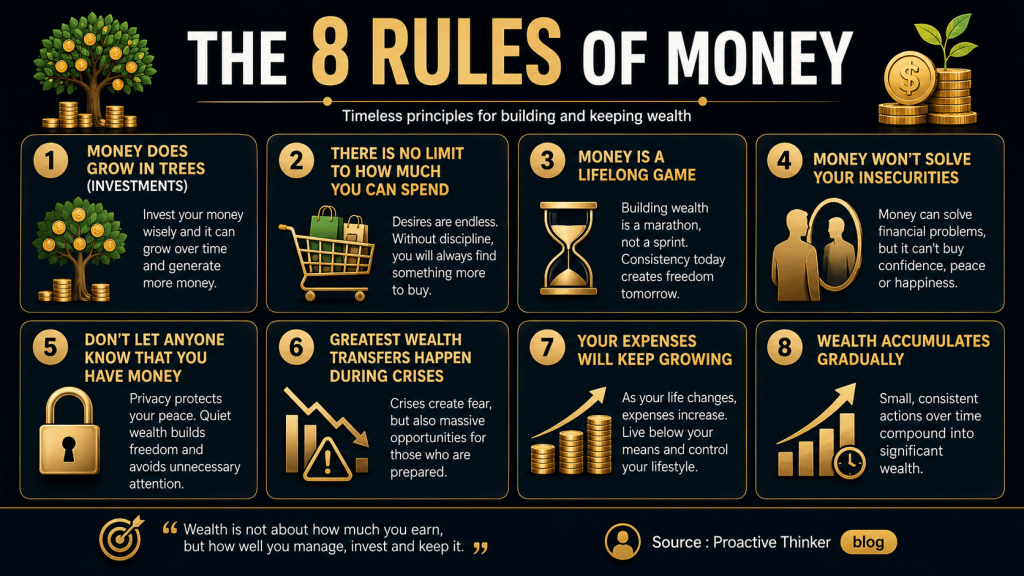
1. Money Does Grow on Trees — Through Investments
People often say, “Money doesn’t grow on trees.” In reality, it can — if you plant it correctly.
Investing is the process of putting your money to work so it can generate more money over time. Stocks, businesses, real estate, and even skills can become “money trees” that keep producing returns year after year.
The key is patience and consistency. Wealth is rarely built overnight, but investments compound quietly in the background until one day the growth becomes undeniable.
2. There Is No Limit to How Much You Can Spend
Human desires are endless. No matter how much money someone earns, there will always be something more expensive to buy.
That’s why many high-income earners still struggle financially. They increase their lifestyle as their income grows. Bigger house, newer car, luxury vacations, expensive habits — the cycle never ends.
True financial intelligence is learning that wealth is not about spending more. It’s about keeping control over your money.
3. Money Is a Lifelong Game
Building wealth is not a sprint; it’s a marathon.
Some people become discouraged because they don’t see instant results. But money management is a lifelong skill. Financial success comes from making smart decisions repeatedly over decades.
Small actions today — saving, investing, learning, avoiding debt — can create massive results in the future.
The earlier you understand this, the more powerful time becomes on your side.
4. Money Won’t Solve Your Insecurities
Many people chase wealth believing it will automatically bring happiness, confidence, or peace.
Money can solve financial problems, but it cannot fix emotional emptiness, insecurity, or lack of purpose. Someone can be rich and still feel unhappy, lonely, or anxious.
Real confidence comes from self-worth, discipline, relationships, and meaningful goals — not just a bank balance.
5. Don’t Let Everyone Know You Have Money
One of the habits of truly wealthy people is privacy.
Showing off wealth often attracts unnecessary attention, fake friendships, jealousy, and financial pressure. Quiet wealth creates freedom. Loud wealth creates expectations.
The goal is not to look rich. The goal is to be financially secure.
Sometimes the most financially successful people are the ones who appear the most ordinary.
6. The Greatest Wealth Transfers Happen During Crises
Economic crises create fear, and fear creates opportunity.
Throughout history, recessions, market crashes, and economic downturns have allowed disciplined investors to buy valuable assets at discounted prices.
While many panic and sell, others quietly accumulate wealth.
This doesn’t mean crises are easy — but those who prepare financially and think long-term often come out stronger than before.
7. Your Expenses Will Keep Growing
As life changes, expenses naturally increase.
Marriage, children, healthcare, education, housing, transportation, and lifestyle upgrades can slowly consume more income. This is why earning more alone is not enough.
Without financial discipline, expenses will always rise to match income.
Learning to live below your means is one of the most important wealth-building habits anyone can develop.
8. Wealth Accumulates Gradually
Most wealth stories are not dramatic. They are slow, steady, and consistent.
Saving regularly, investing monthly, improving skills, building businesses, and staying disciplined over many years creates lasting wealth.
People often overestimate what they can achieve in one year and underestimate what they can achieve in ten.
Wealth is usually built quietly — one smart decision at a time.
Final Thoughts
Money follows principles. The more you understand these principles, the better your financial decisions become.
The 8 rules of money remind us that wealth is not only about income — it’s about mindset, patience, discipline, and long-term thinking.
Financial freedom rarely happens by accident. It happens by understanding the rules and playing the game wisely.
View >
Source : Proactive Thinker
 Indie Borneo