

Losing belly fat is one of the biggest fitness challenges people face. While many believe endless crunches are the answer, experts say reducing belly fat requires a complete lifestyle approach involving nutrition, movement, sleep, and stress management. Belly fat, also called visceral fat, is especially dangerous because it surrounds vital organs and increases the risk of heart disease and type 2 diabetes.
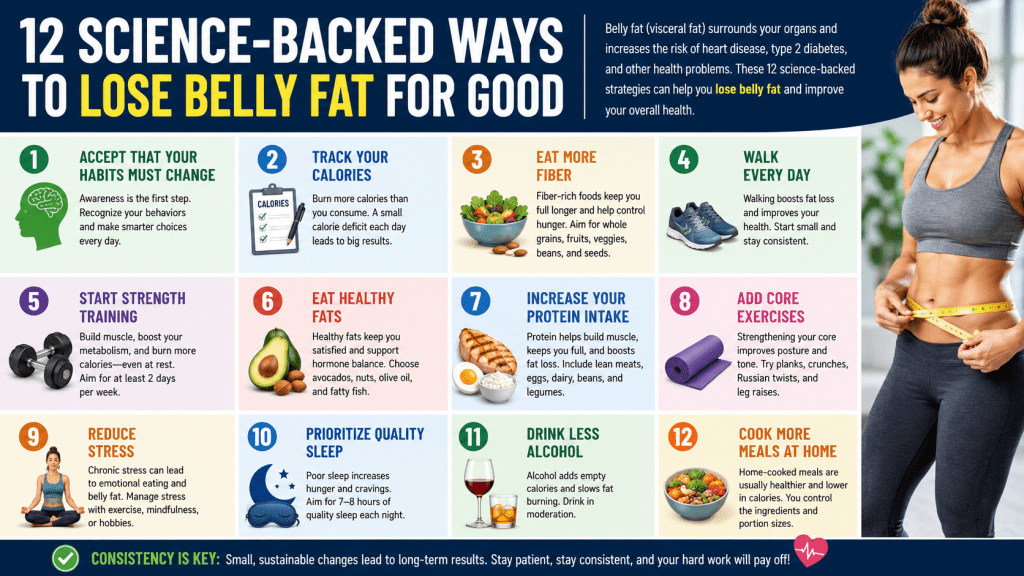
Here are 12 science-backed ways to lose belly fat effectively and sustainably.
1. Accept That Your Habits Must Change
Weight loss starts with awareness. Many people overeat without realizing it, especially during social gatherings or stressful situations. Becoming conscious of your eating habits allows you to make smarter decisions and avoid unnecessary calories.
Small behavioral adjustments can make a huge difference over time.
2. Track Your Calories
The foundation of weight loss is simple: burn more calories than you consume. Tracking calories helps you understand how much food your body actually needs.
Since approximately 3,500 calories equals one pound of fat, creating a moderate calorie deficit consistently can lead to gradual and sustainable weight loss.
You do not have to obsess over numbers. Even reducing portion sizes can significantly lower daily calorie intake.
3. Eat More Fiber
Fiber-rich foods help keep you full longer and reduce cravings. Unlike refined carbohydrates and sugary foods, high-fiber foods digest more slowly and help control appetite.
Good sources of fiber include:
- Oats
- Whole grains
- Vegetables
- Fruits
- Beans
- Chia seeds
- Legumes
Research shows increasing fiber intake alone can support weight loss, even without following a strict diet.
4. Walk Every Day
Walking is one of the easiest and most effective forms of exercise for burning fat.
Studies have shown that regular walking can significantly reduce visceral fat, especially in people who are overweight.
The best approach is to start small:
- Begin with a 10-minute walk after meals
- Gradually increase duration
- Stay consistent
Simple daily movement is often more sustainable than intense workouts.
5. Start Strength Training
Strength training helps build muscle, and muscle burns more calories than fat—even while resting.
Benefits of strength training include:
- Increased metabolism
- Better body composition
- Improved strength
- Long-term fat loss support
Exercises such as squats, deadlifts, push-ups, and resistance training are excellent for reducing overall body fat.
6. Eat Healthy Fats
Not all fats are bad. Healthy fats can actually help reduce hunger and improve satisfaction after meals.
Healthy fat sources include:
- Avocados
- Olive oil
- Nuts
- Eggs
- Fatty fish like salmon
These foods provide important nutrients while helping you avoid overeating.
7. Increase Your Protein Intake
Protein is essential for fat loss and muscle recovery.
Benefits of protein include:
- Increased fullness
- Reduced cravings
- Better muscle growth
- Higher calorie burn during digestion
Protein-rich foods include chicken, fish, eggs, yogurt, beans, and protein shakes. Experts recommend spreading protein intake throughout the day for better results.
8. Add Core Exercises
You cannot spot-reduce fat, but strengthening your core helps build muscle and improve overall body shape.
Effective ab exercises include:
- Crunches
- Planks
- Bicycle crunches
- Russian twists
Core workouts should complement a healthy diet and full-body exercise routine—not replace them.
9. Reduce Stress
Stress can trigger emotional eating and unhealthy cravings. Many people use food as a coping mechanism, especially comfort foods high in sugar and calories.
To manage stress better:
- Exercise regularly
- Practice mindfulness
- Spend time outdoors
- Talk to someone you trust
- Get organized
Managing stress is an important part of long-term fat loss success.
10. Prioritize Quality Sleep
Poor sleep can increase hunger hormones and lead to overeating.
Research shows people who sleep too little tend to consume more calories and crave unhealthy foods the next day.
Aim for 7–8 hours of quality sleep each night to support fat loss and overall health.
11. Drink Less Alcohol
Alcohol contains empty calories and can slow fat burning because the body prioritizes processing alcohol first.
Excessive drinking also lowers self-control, making unhealthy eating more likely.
Reducing alcohol intake can significantly help with belly fat reduction.
12. Cook More Meals at Home
People who cook at home more often tend to eat healthier foods and consume fewer calories overall.
Home-cooked meals usually contain:
- Less sugar
- Less unhealthy fat
- More vegetables
- Better portion control
Cooking at home gives you full control over your nutrition and can be one of the most powerful habits for long-term health.
Final Thoughts
There is no magic shortcut for losing belly fat. Sustainable fat loss comes from combining healthy eating, regular movement, quality sleep, stress management, and consistency.
The good news is that even small daily improvements can lead to major long-term results. Focus on building habits you can maintain for years—not just weeks.
True fitness is not about perfection. It is about consistency.
Source : https://www.prevention.com/ by
 Indie Borneo