

In today’s world, many people believe wealth is created through luck, inheritance, or quick success in the stock market. Social media often glorifies overnight millionaires and flashy lifestyles, making it seem like wealth appears instantly. But in reality, sustainable wealth is usually built slowly through two timeless principles: savings and investments.
According to EconClips, the process of wealth creation begins when individuals choose to delay immediate consumption in order to invest in the future. This simple economic principle has driven the growth of nations, businesses, and civilizations throughout history.
Wealth Begins With Saving
Before anyone can invest, they must first save.
Saving means setting aside part of your income instead of spending everything immediately. It is the foundation of financial independence because it creates capital — the fuel that powers investment and economic growth.
Imagine a farmer who consumes every grain he harvests. He survives today but has nothing left to plant tomorrow. Another farmer saves a portion of his harvest as seeds for the next season. Over time, his farm grows larger and more productive.
This is exactly how wealth works in modern society.
People who consistently save create opportunities for future growth. Savings provide:
- Financial security
- Emergency protection
- Freedom from debt
- Investment opportunities
- Long-term stability
Without savings, individuals become trapped in a cycle of constant consumption and financial vulnerability.
Investments Multiply Wealth
Saving money alone is not enough. Wealth is created when savings are invested into productive assets.
Investments are resources used to generate future income or increase productivity. These include:
- Businesses
- Real estate
- Stocks
- Technology
- Education
- Infrastructure
- Factories and machinery
When investments are made wisely, they increase production and create additional value in the economy.
For example, a business may invest in better machines that allow workers to produce more goods in less time. Increased productivity leads to higher profits, better wages, and economic growth.
This is why investment is considered one of the most important drivers of prosperity.
Consumption vs. Investment
One of the biggest financial mistakes people make is confusing consumption with investment.
Consumption gives temporary satisfaction. Investment builds future wealth.
Buying expensive luxury items may create the appearance of success, but purchasing productive assets creates lasting financial security.
This principle is strongly emphasized in Rich Dad Poor Dad, which teaches people to focus on acquiring assets that generate income rather than liabilities that drain money.
The wealthy often prioritize ownership of productive assets while others focus mainly on consumption.
How Financial Systems Support Wealth Creation
Modern economies rely on financial institutions to connect savers with investors.
Banks, stock markets, and financial institutions play a major role in this process:
- People save money
- Banks and markets collect those savings
- Entrepreneurs borrow or raise capital
- Businesses invest and expand
- Economic productivity increases
This flow of capital helps create jobs, innovation, and economic growth.
Without savings and investments, economies would stagnate because businesses would lack the resources needed for expansion.
Inflation: The Hidden Threat
Another important lesson in economics is understanding inflation.
Inflation reduces the purchasing power of money over time. If your savings remain idle for years without growth, they may lose value gradually.
That is why many investors place money into assets that can outpace inflation, such as:
- Stocks
- Businesses
- Real estate
- Commodities
- Skills and education
Understanding inflation is essential for protecting long-term wealth.
The Magic of Compound Growth
One of the most powerful forces in wealth creation is compound growth.
When investment returns are reinvested, wealth grows exponentially over time rather than linearly.
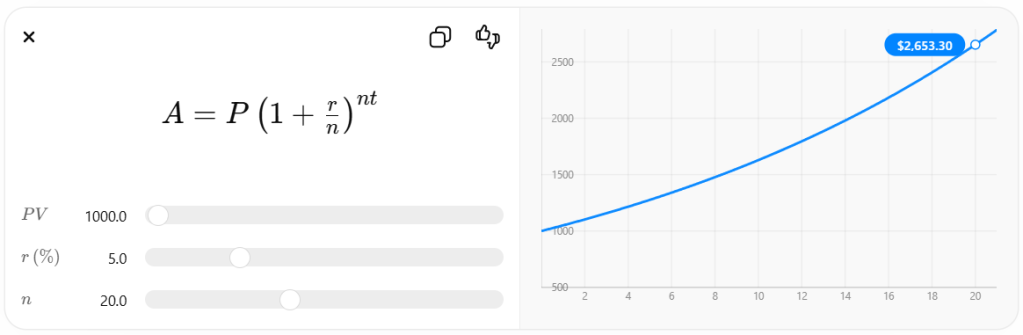
This compound interest formula demonstrates how small investments can grow dramatically over decades through consistent reinvestment.
The earlier a person begins saving and investing, the more powerful compound growth becomes.
Wealth Creation Requires Patience
Real wealth is rarely built overnight.
Most financially successful individuals follow a long-term process:
- Earn income
- Spend less than they earn
- Save consistently
- Invest wisely
- Reinvest profits
- Allow time and compounding to work
Discipline and patience are often more important than intelligence when it comes to building wealth.
Final Thoughts
Wealth creation is not based on luck alone. It is the result of productive activity, disciplined savings, and intelligent investment decisions.
Individuals who understand these principles are better equipped to achieve financial independence, avoid debt traps, and protect themselves from economic uncertainty.
The path to wealth may not always be fast, but it is achievable for those who consistently save, invest, and think long term.vest, and think long term.
View >
Source : EconClips
 Indie Borneo