
What separates self-made millionaires from everyone else?
According to financial expert and researcher Thomas C. Corley, the answer is not luck, inheritance, or even a genius business idea. Instead, one of the most powerful habits shared by wealthy individuals is something surprisingly simple: disciplined saving.
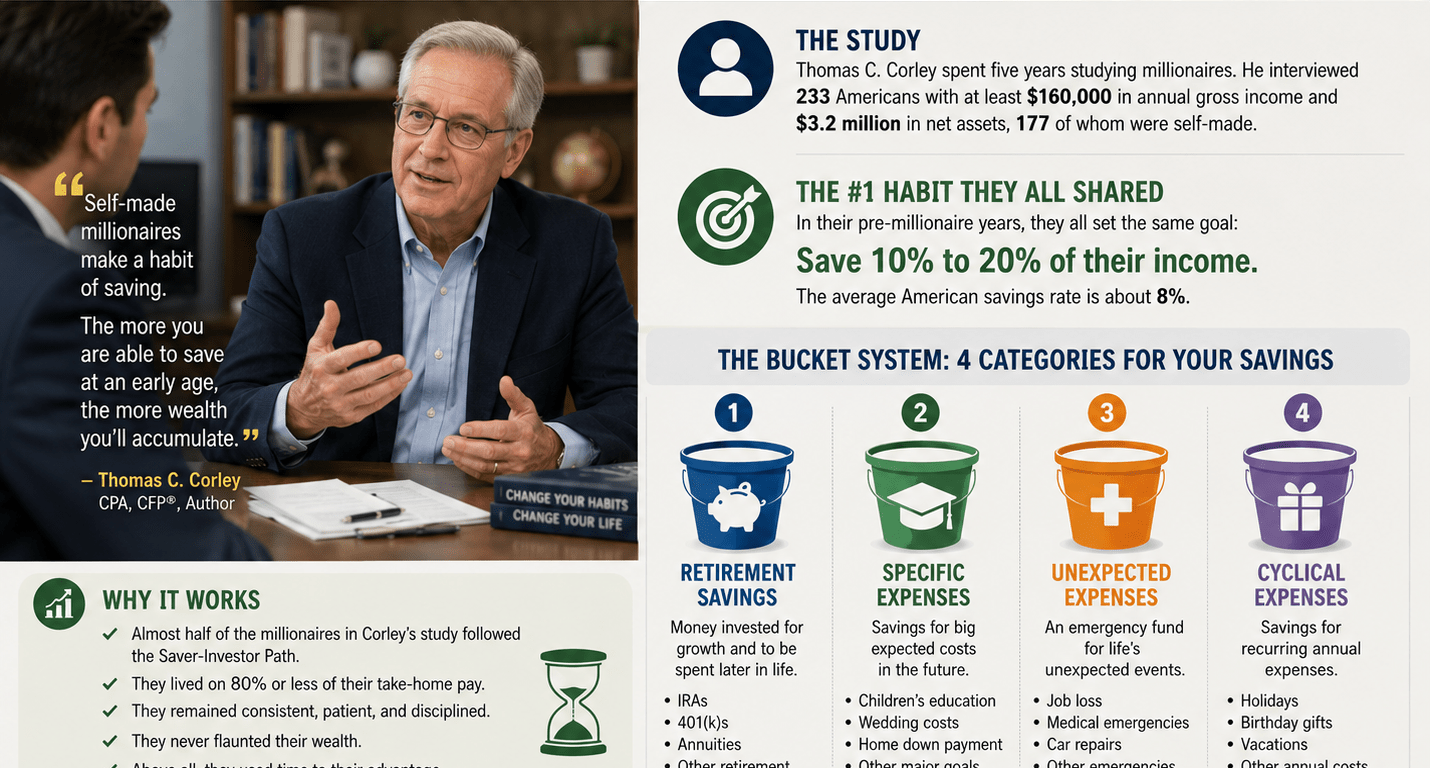
After spending five years studying wealthy Americans, Corley discovered a pattern that appeared again and again among self-made millionaires — they all began their journey with the same savings strategy.
The Research Behind the Millionaire Habit
Corley, a certified public accountant and financial planner, interviewed 233 Americans who earned at least $160,000 annually and had a net worth of $3.2 million or more. Out of those, 177 were self-made millionaires.
His findings were later published in books such as Change Your Habits, Change Your Life, where he explored the daily routines, financial decisions, and long-term habits that contributed to wealth creation.
One of the biggest discoveries was this:
Most self-made millionaires consistently saved between 10% and 20% of their income long before they became wealthy.
While many people wait until they “earn more” to start saving, these future millionaires made saving a priority early in life.
The “Bucket System” Strategy
Saving money alone was not enough.
What made these individuals different was how intentional they were with their savings. Corley found that many used what he called the “Bucket System,” a method of dividing savings into four separate categories.
1. Retirement Savings
This bucket focused on long-term wealth growth.
Money was placed into retirement accounts such as:
- 401(k)s
- IRAs
- Pension plans
- Investment portfolios
- Annuities
The goal was simple: let compound growth work over time.
The earlier they started, the more powerful the results became.
2. Specific Future Expenses
Millionaires planned ahead for large future costs instead of relying on debt later.
This bucket included savings for:
- Home down payments
- Children’s education
- Weddings
- Business investments
- Major purchases
Rather than borrowing money when these expenses arrived, they prepared years in advance.
3. Emergency Savings
Unexpected problems happen to everyone.
Job losses, medical emergencies, economic downturns, or sudden repairs can destroy financial stability if there is no backup plan.
That is why self-made millionaires maintained emergency funds — cash reserves specifically meant for financial crises.
This helped them avoid high-interest debt and financial panic during difficult times.
4. Cyclical Expenses
Many people overspend during holidays, birthdays, and vacations because they never plan for them financially.
Millionaires treated these expenses differently.
They saved gradually throughout the year for:
- Vacations
- Holiday spending
- Birthday gifts
- Family celebrations
This allowed them to enjoy life without damaging their finances.
Living Below Their Means
One of the strongest lessons from Corley’s research is that wealth creation is less about how much you earn and more about how much you keep.
Almost half of the millionaires in his study followed what he called the “Saver-Investor Path.” They lived on 80% or less of their take-home pay and consistently invested the rest.
They avoided showing off wealth, stayed patient, and focused on long-term financial growth instead of short-term appearances.
In other words, many millionaires looked financially “ordinary” while quietly building wealth in the background.
Time Is the Real Secret
Perhaps the most important lesson from the study is that time matters more than perfection.
You do not need to become rich overnight.
The habit of saving consistently — even small amounts — creates momentum over years and decades. Compound growth rewards patience, discipline, and consistency.
As Corley explained:
“Self-made millionaires make a habit of saving. The more you are able to save at an early age, the more wealth you’ll accumulate.”
The journey to financial freedom may begin with a single decision:
spend less than you earn and save intentionally.
Because whether your goal is $1 million or $10 million, every fortune starts with the first dollar saved.
Source : https://www.businessinsider.my/ by Tanza Loudenback
 Indie Borneo