
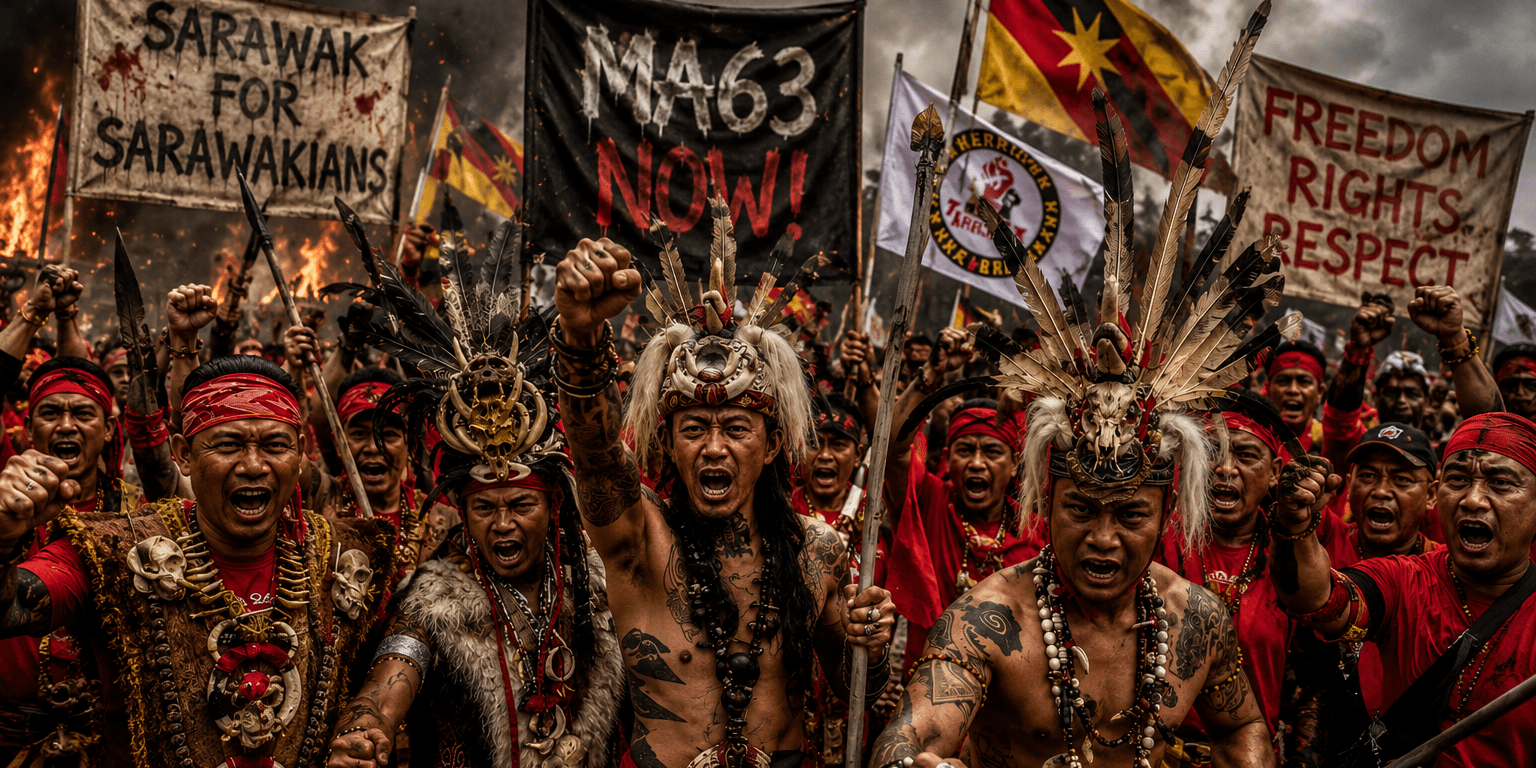
Politics in Sarawak has always been unique. With its diverse ethnic composition, vast rural landscape, and strong regional identity, the state’s political direction is often shaped by community influence and voting patterns. Among all groups in Sarawak, the Dayaks stand out as one of the most important political forces — not only because of their population size, but because of their ability to determine who governs the state.
At a forum titled “Independence: The Final Destination” held in Kuching, several political leaders highlighted what many observers have long believed: the Dayaks could become the true “kingmakers” of Sarawak’s future.
The Power of Numbers
The chairman of the Movement of Change, Sarawak (MoCS), Francis Paul Siah, emphasized that the Dayaks hold the numerical strength needed to shape the outcome of Sarawak elections.
In a state where political support is often divided among ethnic and regional lines, the Dayak vote has become increasingly significant. Siah noted that while many Chinese Sarawakians appear more open to discussions on greater autonomy or independence, and many Malays prefer maintaining the existing political arrangement within Malaysia, the Dayaks remain the largest deciding bloc.
This position gives the Dayak community enormous political influence. In many rural and semi-rural constituencies, Dayak voters can determine whether a government remains in power or is replaced.
A Community Divided
However, despite their numbers, one issue continues to weaken Dayak political influence — division.
For decades, Dayak leaders and voters have been spread across numerous political parties. Some align themselves with ruling coalitions, while others join opposition parties or regional movements. This fragmentation often reduces the collective bargaining power of the Dayak community.
Francis Paul Siah openly questioned why Dayaks continue to be scattered across so many political groups instead of uniting around common goals and shared interests. According to him, political disunity prevents the community from fully exercising its influence.
Without a unified direction, Dayak concerns such as native land rights, rural development, economic inequality, educational opportunities, and political representation risk being overshadowed by larger political agendas.
The Rise of Political Awareness
At the same forum, Voon Lee Shan, president of Parti Bumi Kenyalang, echoed similar concerns. He reminded the audience that Dayaks make up around 40 percent of Sarawak’s population, making them one of the most influential demographic groups in the state.
Voon urged younger Dayaks to become more politically aware and actively participate in shaping Sarawak’s future. He stressed that the younger generation must understand the importance of voting, policy-making, and political participation if they want meaningful change.
This growing awareness among younger voters could eventually reshape Sarawak politics. With improved access to education, digital media, and political information, many young Dayaks are beginning to question long-standing political structures and demand greater accountability from leaders.
The Debate on Autonomy and Independence
One of the most controversial themes discussed during the forum was the idea of Sarawak independence or greater autonomy.
Over recent years, discussions surrounding the Malaysia Agreement 1963 (MA63), state rights, oil revenue, and federal-state relations have become increasingly prominent in Sarawak politics. Some political activists argue that Sarawak has not fully received the rights and autonomy originally promised during the formation of Malaysia.
While opinions on independence remain divided, the issue continues to gain public attention, especially among regional political movements.
The forum speakers argued that if any major political transformation were to happen in Sarawak, the Dayak community would ultimately play the deciding role. Their voting patterns and political unity could determine whether Sarawak maintains the status quo or pursues a stronger regional identity and autonomy.
Challenges Facing the Dayak Community
Despite their political importance, many Dayak communities continue to face significant challenges, particularly in rural areas. Issues such as poverty, infrastructure gaps, limited economic opportunities, land disputes, and migration of young people to urban centers remain ongoing concerns.
Many critics argue that the Dayaks have not benefited proportionately from Sarawak’s natural wealth and economic development. Although Sarawak is rich in resources, some rural Dayak areas still lag behind in terms of roads, healthcare, internet connectivity, and employment opportunities.
These concerns have fueled calls for stronger representation and more effective leadership that genuinely prioritizes Dayak interests.
The Future of Sarawak Politics
The idea of Dayaks becoming the “kingmakers” of Sarawak is not simply about numbers. It is about political awareness, unity, and strategic influence.
If the Dayak community becomes more united and politically organized, it could become the single most powerful determining force in Sarawak politics. Their decisions could shape government policies, leadership direction, and even debates about Sarawak’s constitutional future.
As Sarawak continues to evolve politically and economically, one reality becomes increasingly clear: the future of the state may very well depend on how the Dayaks choose to use their political power.
The question now is no longer whether the Dayaks have influence — but whether they are ready to fully exercise it.
Source : Dayak Daily
 Indie Borneo